Why Do You Never Buy for the Price at Which It Is Being Sold at That Moment?
Imagine a situation at the airport – you exchange euros for dollars at the current rate, but if you wanted to exchange them back even just a minute later, you would receive less. This difference, which the exchange office keeps as a fee, is called a spread in the world of cryptocurrencies. Although you often see one price in the application, for example for Bitcoin, in reality there is no single price, because the market is the result of a constant battle between those who want to buy as cheaply as possible and those who want to sell as expensively as possible.
Supply and Demand
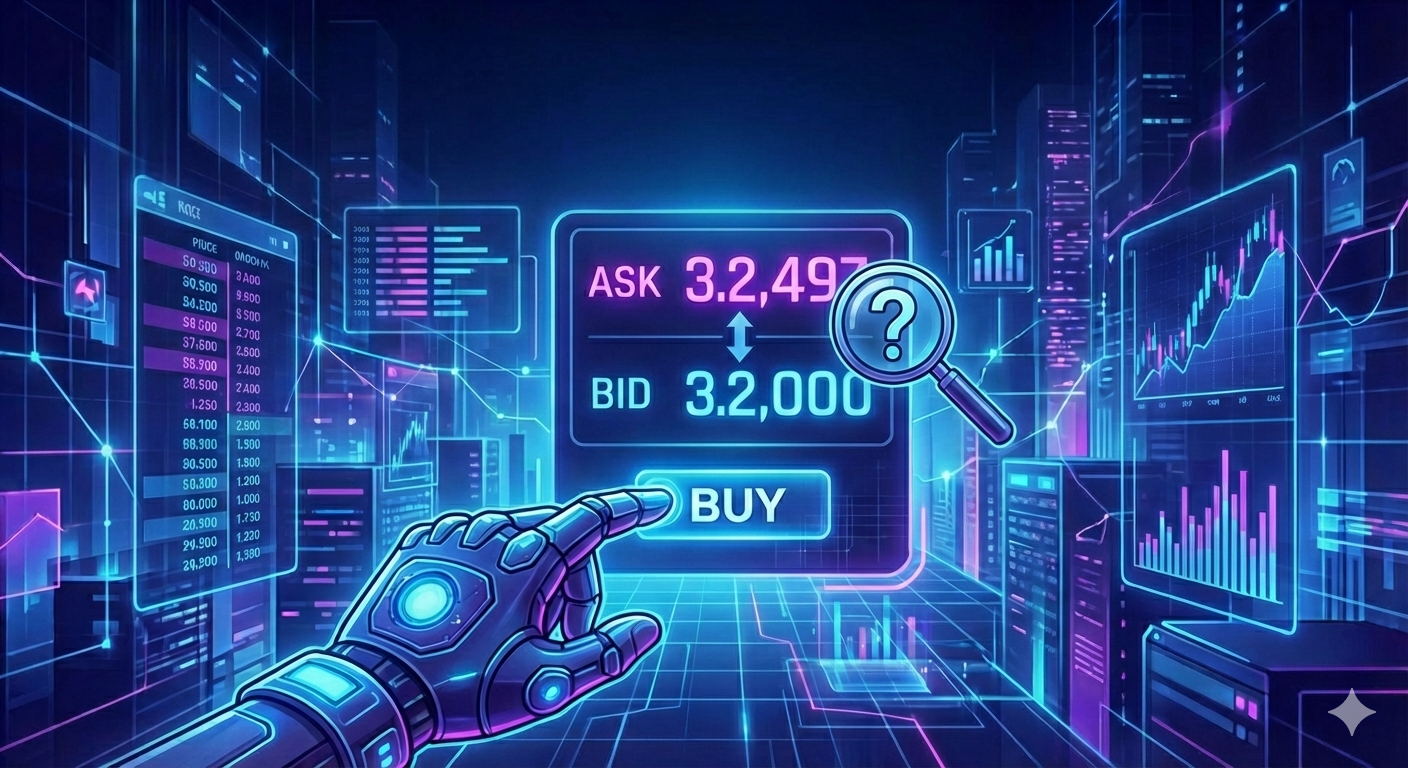
This battle takes place in the so-called order book, where buyers’ offers labeled as “Bid” meet sellers’ requests known as “Ask.” In this context, the spread is defined as the price gap between the highest amount someone is willing to pay at that moment and the lowest amount for which someone else is willing to sell their cryptocurrency. A trade on the exchange occurs only at the moment when one of the parties gives in and accepts the conditions of the other, while this difference serves as a natural brake and at the same time a reward for those who ensure the continuous possibility of trading on the market.
Why Does the Spread Exist at All?
It is important to say that the spread is not a flaw in the system, but its natural part, functioning as a reward for risk and for enabling you to trade instantly. On exchanges, so-called market makers operate, which are large institutions willing to buy cryptocurrency from you at any time or sell it to you. However, they do so by buying from you at a lower Bid price and selling to you at a higher Ask price, thereby creating profit for keeping digital assets available and waiting until someone shows interest in them.
The Decisive Role of Market Liquidity
The size of this difference is directly tied to liquidity, which in the crypto world means the level of activity and the amount of available coins on the market. For dominant cryptocurrencies such as Bitcoin or Ethereum, the spread is usually extremely narrow, because thousands of traders continuously fill the order book with new offers that are close in price. On the contrary, for lesser-known altcoins, the spread can be dramatically wider, because there are few sellers and their price expectations are too far from what buyers are willing to risk at that moment.
Invisible Cost
For the user, the spread represents an invisible cost that must be paid immediately upon exchange, which is crucial for properly planning future transactions. If you exchange fiat currency or even a selected cryptocurrency at the seller’s current market price and immediately want to sell it back, you will execute the transaction at the lower buyer’s price.

Scarcity: Algorithm vs. Natural Reserves
By one of the most widely used measures of supply scarcity — the stock-to-flow ratio (S2F) — Bitcoin today scores roughly twice as high as gold. This does not mean Bitcoin is twice as valuable, twice as safe, or destined to rise in price. It simply describes how slowly new supply is added relative to the amount that already exists.
The key question is therefore not which asset is "better", but how their supply structures differ.

Where Are My Cryptocurrencies?
Discover where cryptocurrencies are actually stored, how wallets work, and why understanding private keys is essential for keeping your crypto under control.