News
We regularly inform you about news from the world of cryptocurrencies, digital assets, security, regulation and crypto4me services.
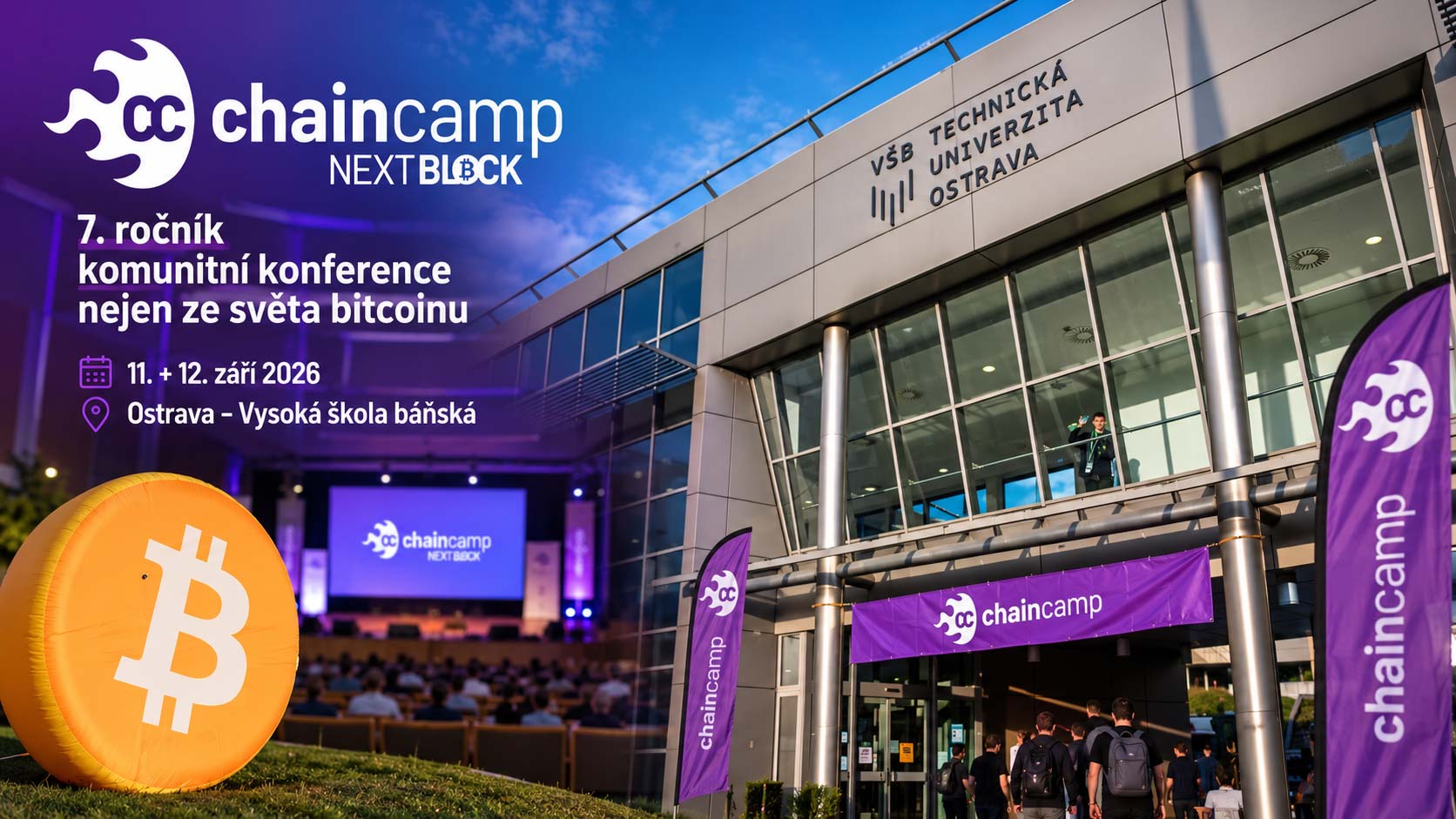
ChainCamp 2026 brought together Bitcoin, personal freedom and the Czech and Slovak community
The seventh edition of the ChainCamp conference brought the Czech and Slovak Bitcoin community to Ostrava on September 11 and 12. Alongside Bitcoin, this year's topics also included asset protection, privacy and a personal Plan B. Brand manager Tomáš Bára attended the event on behalf of crypto4me and shares his impressions.

Change in the Monetary Regime: A Second Inflation Wave and 5% Bond Yields
The shift from expected monetary policy easing to the threat of further tightening is changing conditions for the digital asset market. The combination of more expensive oil, unfavorable inflation data and rising U.S. bond yields is creating an environment for Bitcoin that it has not faced since the end of 2023.

The End of Weekend Silence in Banking: Standard Chartered Brings Instant Settlement to Institutions
The more than 160-year-old banking institution has become the first bank-authorised distributor of HKDAP, a regulated stablecoin pegged to the Hong Kong dollar and backed by reserve assets. Its use is intended to enable continuous on-chain transaction settlement and reduce the timing mismatch between tokenised assets and traditional payment systems.

Will the Landmark CLARITY Act Crypto Bill Pass Despite Political Disputes?
The U.S. Senate is facing a decisive procedural vote on the CLARITY Act (H.R. 3633), which is intended to deliver the most comprehensive reform of digital asset regulation in the United States to date. The bill successfully passed the House of Representatives in July 2025 and also secured support in a Senate committee in May 2026. However, the path toward its final approval remains complicated. Securing the required 60 votes in a divided Senate is being hindered by ethical disputes surrounding crypto-related income linked to the presidential office, concerns within the banking sector over stablecoins, and an exceptionally tight legislative calendar.

Hyperliquid Strategies Increases Capital Facility to USD 2.5 Billion: Targets Further Accumulation of the HYPE Token
Hyperliquid Strategies is expanding its equity financing agreement with Chardan Capital Markets by USD 1.5 billion. The capital raised is intended to strengthen its treasury strategy focused on purchasing the HYPE token, with the move coming during a period of increased market interest triggered by statements from U.S. President Donald Trump regarding regulation of the platform.

Sberbank estimates USD 46 billion in regulated crypto trading under Russia’s new rules
Russia is preparing to introduce a regulated framework for cryptocurrency trading, and Sberbank estimates that trading on regulated exchanges could reach up to USD 46 billion during the first year. It is estimated that only around 20% of the country’s currently estimated cryptocurrency transaction volume could move to regulated exchanges, suggesting that the new system is more likely to formalise part of existing activity than to create an entirely new market.

Solana’s Return Above USD 100: Network Records and the Unleashing of the Bond Market
The sharp approximately 40-percent increase in the price of the SOL token is not only the result of record transaction volumes and the expansion of tokenized assets, but is also related to a change in macroeconomic sentiment.

Stablecoin cards cross USD 1 billion in monthly spending as everyday adoption accelerates
Stablecoins are increasingly moving beyond cryptocurrency exchanges and blockchain transfers into ordinary consumer payments. Spending through tracked crypto payment cards reached approximately USD 1.04 billion in July, more than tripling over the past year. Dollar-backed stablecoins were responsible for most of this activity, with users increasingly paying for groceries, transportation, restaurants, and online subscriptions directly from their digital asset balances.

Goldman Sachs strengthens its ETF business: Acquires asset manager NEOS Investments for USD 2.25 billion
American investment bank Goldman Sachs continues its massive expansion in the actively managed funds segment. It has agreed to acquire NEOS Investments, with the maximum value of the transaction reaching USD 2.25 billion. This acquisition will bring Goldman Sachs Asset Management not only USD 30 billion in assets under management, but also specialized options strategies and funds with exposure to Bitcoin and Ethereum.

Bank of England launches tests of a new model for international trade
A pilot project within the Digital Pound Lab environment is testing the interconnection of crypto-assets and state digital money. At the same time, the United Kingdom is adjusting rules for systemic stablecoins and preparing its payment infrastructure for continuous operation.

Standard Chartered Expects Massive Tokenization Growth: LINK Token Could Rise to USD 200
Analysts at international bank Standard Chartered have presented a bold outlook that has stirred discussion about the future of digital finance. According to their latest study, the market for tokenized real-world assets is expected to reach USD 4 trillion by the end of 2028. The Chainlink network is expected to become a key infrastructure for this massive shift of capital, with the bank projecting as much as a 25-fold increase in the price of its LINK token – from the current approximately USD 8 to as much as USD 200 by 2030.

Mastercard simplifies cross-border stablecoin transfers
Can stablecoins become the new standard for global trade if their development in practice encounters complex verification and regulatory obstacles? This is precisely the challenge that payments giant Mastercard is attempting to address in a new pilot project in cooperation with Borderless. Together, they are connecting the world of traditional payments with blockchain infrastructure and demonstrating what the future of international transfers could look like.