
Bitcoin-Backed Mortgages: The Evolution of Financing or the Beginning of a Revolution?
You own Bitcoin whose value has risen in recent years, and you want to buy a home. Do you have to sell your cryptocurrency, or can it be used as collateral for a loan? In the United States, there are already products that make it possible to finance a property with the help of Bitcoin. Alongside the opportunity to keep your investment, however, they also bring new obligations and risks.
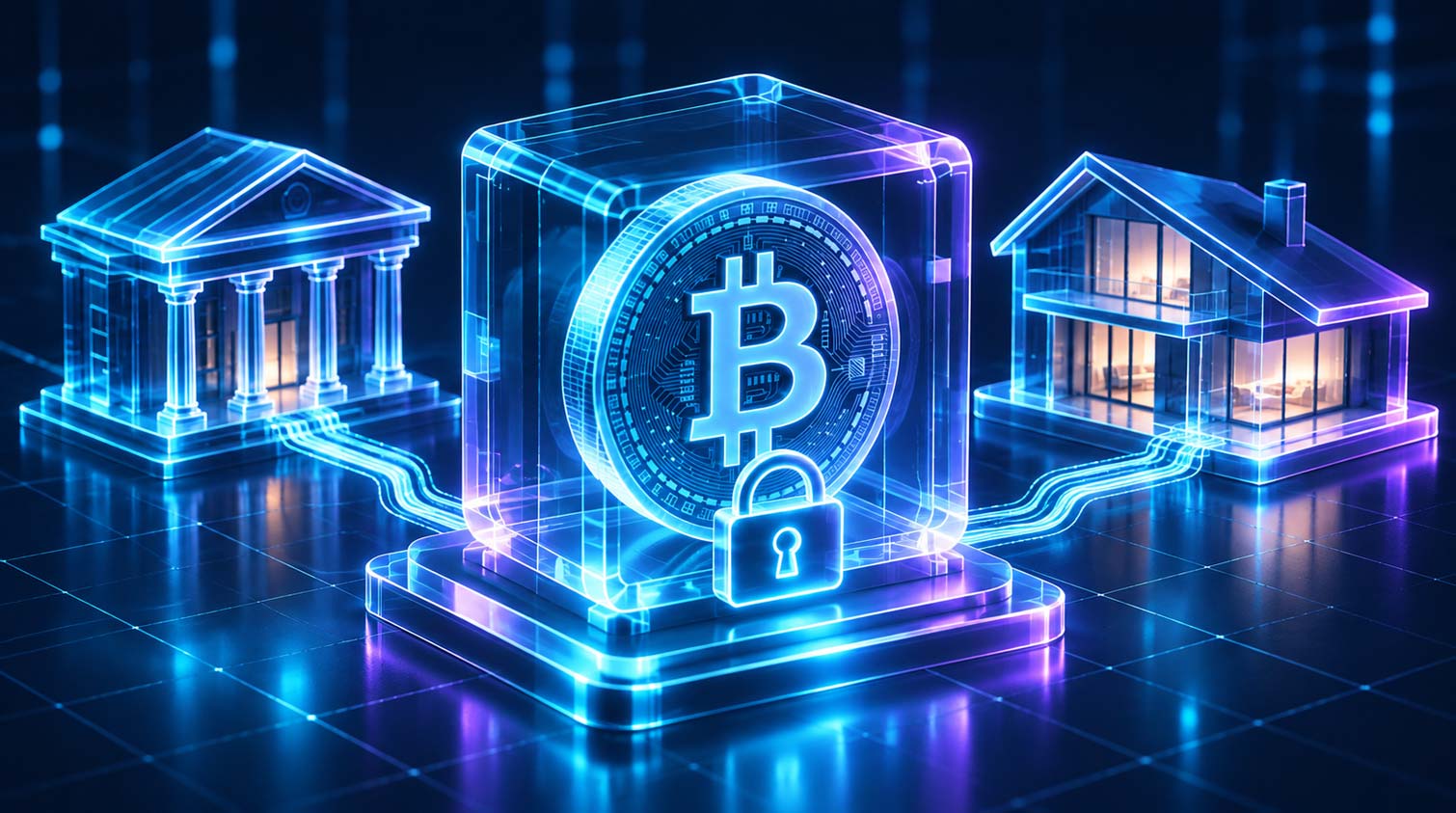
How does financing with Bitcoin work?
The principle is based on ordinary lending against valuable assets. The investor provides Bitcoin as collateral and obtains money without having to sell the cryptocurrency immediately. Unlike real estate, however, the price of Bitcoin can change significantly within a short time.
A "Bitcoin mortgage" is not a single, precisely defined product. Bitcoin can directly secure a loan, serve as collateral for an additional down payment loan alongside a classic mortgage, or the provider may merely take it into account when assessing the client's financial reserves. Each option has different terms.
What products already exist?
In 2026, the American companies Better Mortgage and Coinbase introduced a model in which the client obtains a regular mortgage on the property and an additional down payment loan secured by Bitcoin. For a down payment loan of 100,000 dollars, the initial value of the pledged BTC must be at least 250,000 dollars. According to the published terms, a drop in the Bitcoin price alone does not trigger an automatic sale of the collateral, but failure to repay the loan can.
Milo offers a different model, in which cryptocurrencies together with the property can secure financing of up to the entire purchase price. With some of its products, the client pays only interest on an ongoing basis, while the principal must be repaid later. Milo also offers an option in which Bitcoin is taken into account as a financial reserve without the client having to pledge it.
In Europe, Firefish, for example, provides Bitcoin-backed loans. The collateral is locked using a multisignature solution on the blockchain. Unlike the Better Mortgage product mentioned above, however, a price drop can lead to a request to top up the collateral and subsequently to its forced sale.
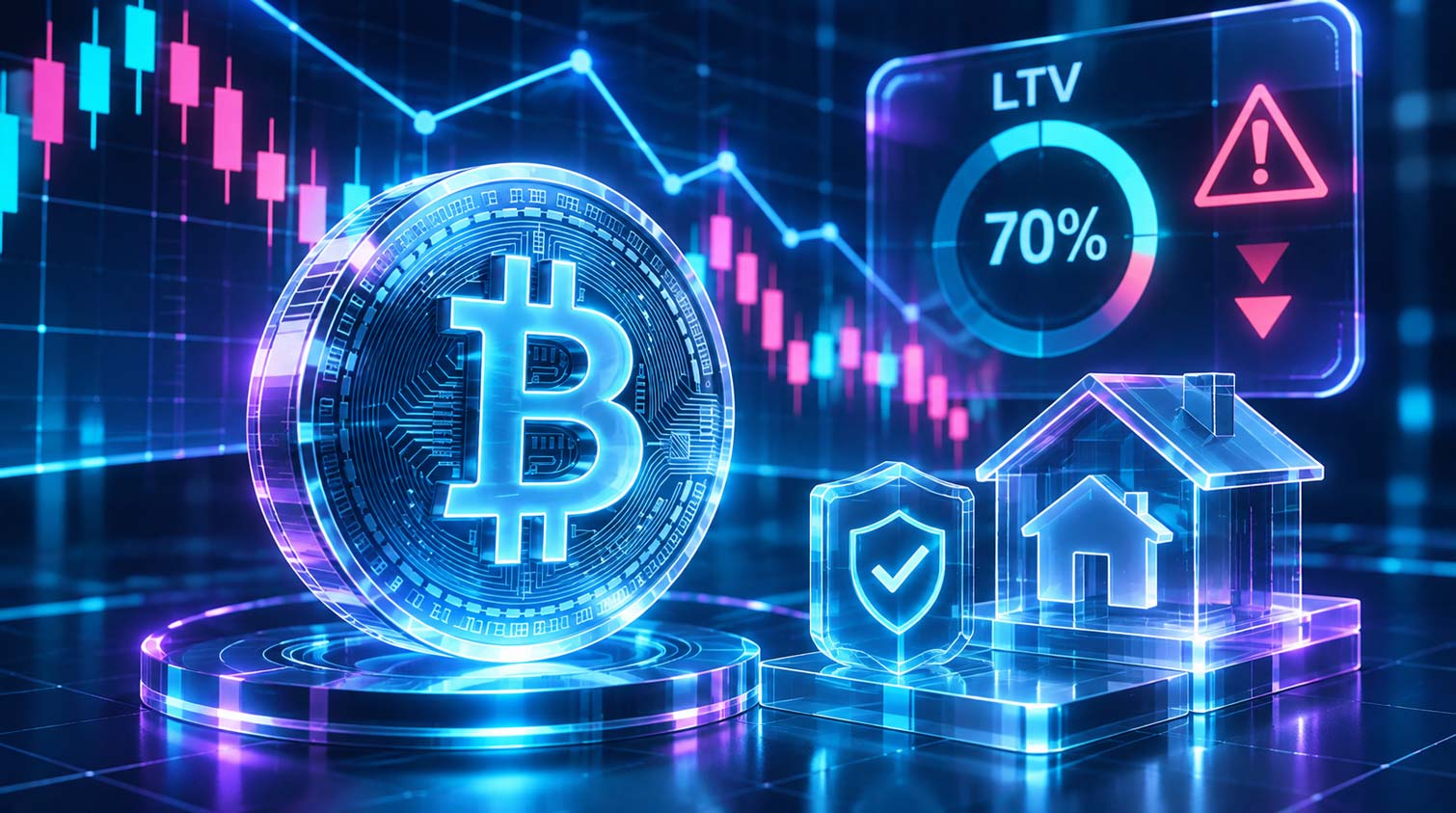
Why is it important to monitor LTV?
LTV (Loan-to-Value) expresses the ratio of debt to the value of the collateral. If we borrow 2 million Czech crowns against Bitcoin worth 5 million crowns, the initial LTV is 40%. If the value of the pledged BTC falls by half, the LTV rises to 80%, even though the amount of the debt has stayed the same.
With products where the collateral is continuously revalued, a high LTV may mean an obligation to top up the collateral or repay part of the loan. If the client does not comply with the request, a forced sale of Bitcoin may follow precisely at a time of falling prices.
The Bitcoin remains yours. But do you have it under control?
When pledging Bitcoin, it is essential to find out who holds the keys and how the collateral may be handled. In the Better Mortgage and Coinbase model, the BTC is transferred to a custody infrastructure, and the contractual terms allow the lender to reuse it, which is referred to as rehypothecation. The client may thus be entitled to the return of an equivalent amount of BTC without the original coins being reserved for the entire period.
It is also important to know when the Bitcoin will be released. With this product, it may remain locked until the main mortgage is fully repaid or refinanced. The risk therefore lies not only in price developments, but also in the custody terms and the provider's ability to meet its obligations.
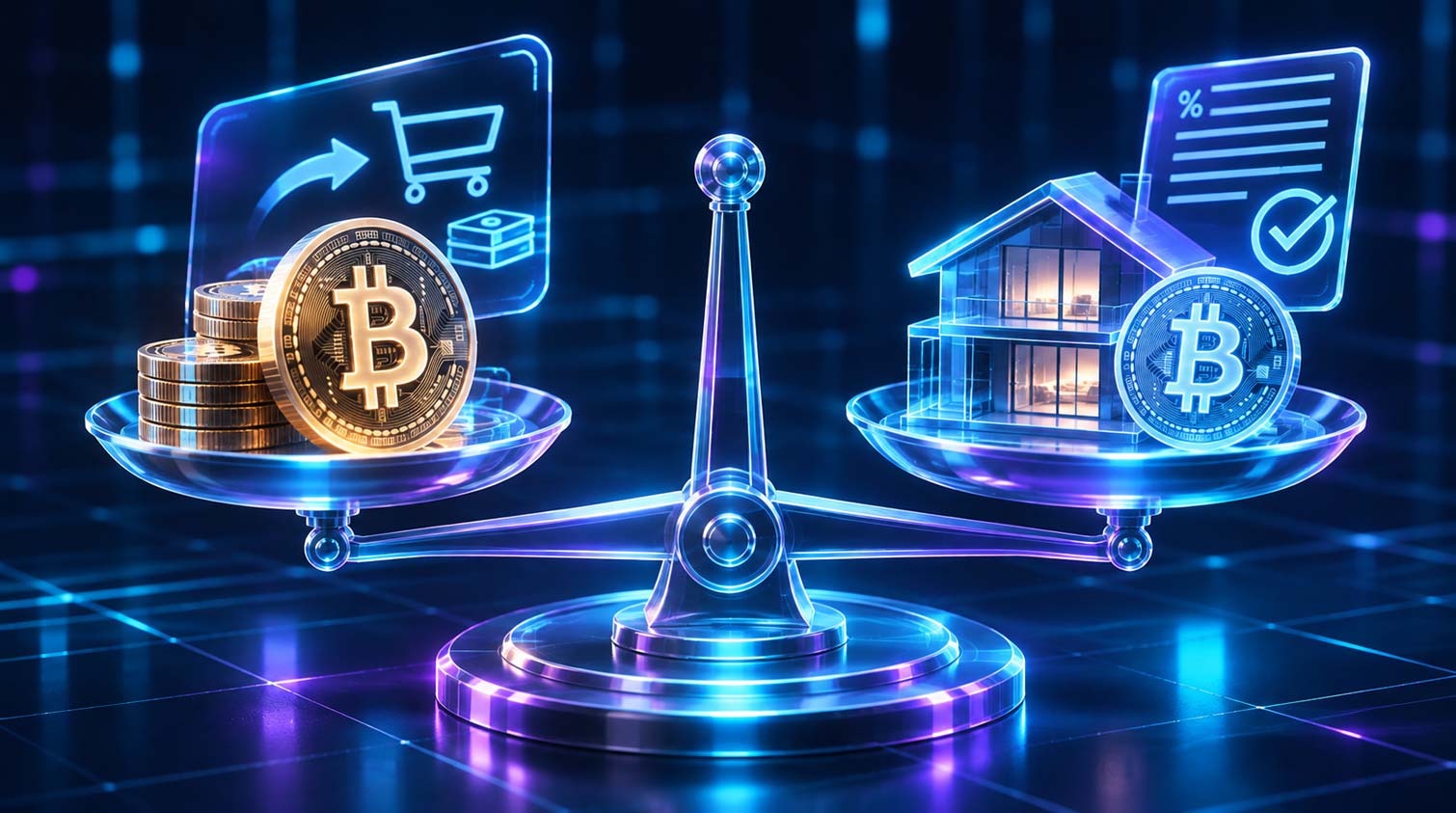
Is it worth pledging Bitcoin, or selling it?
Pledging makes it possible to keep the investment position and possibly share in future growth of the BTC price. At the same time, however, it creates debt, interest costs and the risk of losing the collateral. Selling part of the Bitcoin, on the other hand, reduces the size of the investment but need not create an additional credit obligation.
Moreover, a rise in the price of pledged Bitcoin does not by itself automatically pay off a mortgage. The debt is reduced only by actual repayments; any release of part of the collateral depends on the contract.
And what about the Czech Republic?
In the Czech Republic, this is not yet a commonly available mortgage product. According to statements by banks cited in the original article, combining a down payment loan with a classic mortgage runs up against requirements concerning own funds, creditworthiness assessment and risk management. A standalone Bitcoin-backed loan therefore cannot automatically be considered a solution for financing a Czech mortgage.
Conclusion
Bitcoin-backed loans show that, in addition to investing, digital assets can also take on a practical role in home financing. From today's perspective, this is an evolution of the established principle of lending against assets rather than an immediate revolution.
Before signing a contract, it is necessary to understand the level of indebtedness, the repayment terms, the risk of a forced sale, control over the collateral and the options for releasing it. For some investors, keeping their Bitcoin may be an advantage; for others, it will be more sensible to sell part of their cryptocurrency and not take on additional debt.
The information reflects the state of available sources as of November 2026. This text is for educational purposes and does not constitute individual investment, credit, legal or tax advice.
Author
Tomáš Bára

Bitcoin-Backed Mortgages: The Evolution of Financing or the Beginning of a Revolution?
Can you buy a property without selling your Bitcoin? In the US, Bitcoin-backed mortgages and loans already exist. Find out how these models work, what LTV means, who controls the collateral during repayment and why using them in the Czech Republic is still complicated.
Cryptocurrency Scams