
AI and Cryptocurrencies: How Artificial Intelligence Can Change Finance, Banking and Blockchain
Artificial intelligence is already helping banks detect fraud, assess risks and communicate with clients. Combined with blockchain, it can gain further capabilities: working with digital wallets, preparing transactions or automatically paying for services. This increases the importance of the question of what powers we will entrust to it when handling money.
AI is already changing banking today
Financial institutions use machine learning to analyse transactions and look for unusual patterns. A system can, for example, flag a payment that does not match the client’s usual behaviour. AI also helps with assessing credit risk or processing documents.
Generative AI can take banking apps further. In addition to showing the balance, it can explain spending, point out its unusual growth and help clients better understand their own finances.
From AI assistant to AI agent
An AI assistant usually answers questions or prepares recommendations. An AI agent can be given a specific goal, use other tools and, with the appropriate permissions, also act.
It can, for example, prepare how money is split after payday so that a set reserve remains in the account and the rest is used according to the user’s rules. What matters is whether the system only proposes the operation or is also allowed to carry it out.
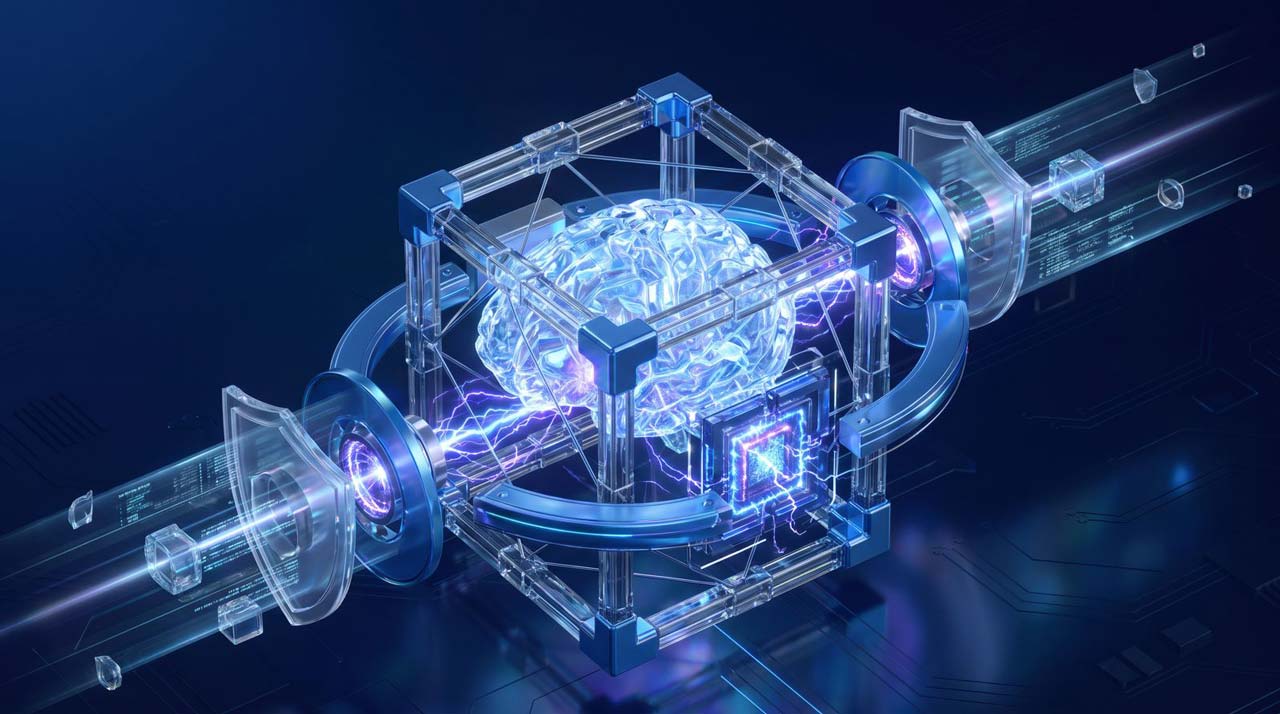
Why blockchain may be interesting for AI
Blockchain operates around the clock and enables programmable transfers of digital assets. Smart contracts, i.e. programs that execute pre-set rules, can determine the conditions for using funds.
An AI agent can thus, for example, pay for data or computing power needed to complete a task. With small payments, manually confirming each operation would be impractical. AI can also work with ordinary money through banking interfaces.
AI wallets and stablecoins
AI having access to a wallet does not have to mean unlimited control over money. It is possible to set a maximum transaction amount, a daily budget or a list of permitted recipients. Higher payments may require human confirmation.
For automated payments, stablecoins may be of interest, as they aim to maintain their value against a particular currency, such as the US dollar. An agent can be given a budget in USDC and use it to pay for digital services. The user does not have to deal with which payment infrastructure is running in the background.
Easier use of cryptocurrencies and review of smart contracts
Using cryptocurrencies is often complicated by choosing the network, fees or the correct transfer procedure. AI can compare the available options, explain them and point out the risks. This can make it easier for beginners to find their way around.
It can help developers review smart contracts, create tests and find bugs. However, it can itself produce faulty code or overlook a real problem, so expert review remains important.
Similarly, AI can be used to analyse blockchain transactions and look for suspicious movements of funds. A public transaction history, however, does not by itself reveal the identity of the owner of a particular address.

AI and financial fraud
The same technology can be used by both defenders and fraudsters. While it helps banks and exchanges detect suspicious operations, it allows attackers to create convincing messages, imitate voices or produce fake videos known as deepfakes.
Image and voice alone may therefore not reliably confirm a person’s identity. Cryptographic verification of requests may gain greater importance. Even here, however, the protection of private keys matters. A stolen key can also be used by an attacker.
Trading and AI tokens
AI can analyse market data and help automate trading strategies. The ability to execute a trade, however, does not mean the ability to reliably predict the price. Faulty data, unexpected events or a strategy too closely fitted to the past can lead to losses.
So-called AI tokens also call for caution. A project’s label does not prove its quality. What matters is what problem it solves, whether it needs blockchain and what real function the token performs in it.
Risks and control over money
AI can produce a convincing but incorrect answer. If it is allowed to move funds on its own, a mistake can have direct financial consequences. With blockchain transactions, the risk is more pronounced, because reversing them is usually difficult or impossible.
The greater the powers AI gains, the more important limits, confirmation of significant operations and the ability to block access become. The user should know whether the system may only read data or also make payments.
Privacy and fair decision-making also matter: more data about a client does not automatically guarantee a fairer assessment. In addition, the dependence of many services on a few AI providers can concentrate risk. A decentralised blockchain does not by itself guarantee the decentralisation of the entire service.
Banks and cryptocurrencies in the future
AI can gradually connect traditional banking and blockchain services. Some operations may go through a bank account, others through stablecoins. The choice may be driven by cost, speed, security and the rules of the given market.
For users, what may change most is the way they operate their finances: instead of searching for items in an app, they enter a request in everyday language. AI prepares the operation, explains its terms, and the person checks and confirms it.
Conclusion
The combination of AI and blockchain can simplify financial services and automate routine tasks. Its benefit will depend on the reliability of the systems and the permissions that are set. The key will be to determine what AI may do with our money and which decisions we keep under our own control.
This text serves informational and educational purposes only and does not constitute investment advice. Crypto assets are volatile, and you may lose the entire amount invested.
Author
Tomáš Bára

Cryptocurrency Scams
Staking: Where Do the Rewards Come From?
Staking lets you earn rewards for helping secure a blockchain network. Find out where the rewards actually come from, how to read APR and APY, what liquid staking adds, and which risks and withdrawal conditions are worth knowing in advance.