
Layer 1 and Layer 2: Why Blockchain Needs More Layers
When Bitcoin was created, its main goal was not to process hundreds of thousands of payments every second. What mattered more was solving a different problem: how to transfer digital value without a bank or other central authority, while keeping the whole system secure and making sure the same money could not be spent twice.
Ethereum later expanded on this idea. Blockchain was no longer meant to serve only as a way to transfer value, but also to support smart contracts, decentralized applications, stablecoins, or tokenization.
As the number of users grew, however, a new problem emerged.
What happens when too many people want to use the same blockchain at once?
The capacity of the main network is not unlimited. If the number of transactions increases, users start competing for limited space in blocks, the network can slow down, and fees rise.
This is exactly where the need to split the work across multiple layers arises.
Layer 1 forms the secure foundation. Layer 2 helps that foundation handle more traffic.
What is Layer 1
Layer 1 is the underlying base blockchain on which the entire system rests. Bitcoin, Ethereum, Solana, and Avalanche are examples of independent Layer 1 networks, because each has its own rules, its own way of verifying transactions, and its own consensus mechanism.
Layer 1's job is to make sure the network agrees on which transactions are valid, in what order they occurred, and what the current state of the blockchain looks like. It also stores the transaction history and forms the security foundation for applications and other layers that can be built on top of it.
Individual blockchains use different mechanisms for this. Bitcoin uses Proof of Work, while Ethereum today runs on Proof of Stake. The technical solution therefore differs, but the basic role is the same: Layer 1 is the main layer on which the security and trustworthiness of the whole network rests.
Why we can't just make Layer 1 faster
At first glance, a simple solution seems obvious.
If the blockchain can't keep up, why not make blocks bigger, increase performance, or shorten the time between blocks?
Technically, this is possible.
The problem is that a blockchain is not an ordinary database run by a single company.
Its whole purpose is to be verifiable by a large number of independent participants. If we dramatically raise the requirements for hardware, internet connection, or disk space, the number of people able to run their own node can start to fall.
The network would be faster, but it could also become more centralized.
This problem is often referred to as the blockchain trilemma.
A blockchain tries to combine, at the same time:
- – security,
- – decentralization,
- – scalability.
In practice, trade-offs arise between them.
Both Bitcoin and Ethereum have historically placed strong emphasis on security and decentralization. If they are also meant to serve significantly more users, a way needs to be found to move part of the workload elsewhere.
And this is exactly where Layer 2 comes in.
What is Layer 2
Layer 2 is a solution built on top of the main blockchain that tries to take over part of the transactions or computations.
This does not simply mean "another, faster blockchain."
What matters is that Layer 2 uses the base network beneath it, in some way, as a security or settlement layer.
We can picture it as an accounting system.
Layer 1 is the main ledger, where the final state must be maximally trustworthy.
Layer 2 works as a faster operational layer that processes a large number of individual operations and then sends only the necessary result or proof to Layer 1.
This makes it possible to significantly increase the number of transactions and lower their cost, without the base blockchain having to process every single operation itself.

Bitcoin and Lightning Network
Bitcoin illustrates well why additional layers make sense. Its base network is designed conservatively, a block is created on average roughly once every ten minutes, and capacity is limited. This is an advantage for security and decentralization, but a limitation for a large volume of everyday payments.
One solution is the Lightning Network, a payment network built on top of Bitcoin. Its main idea is simple: not every single payment needs to be written to the main blockchain immediately. Users can open a payment channel in which they repeatedly transfer value between each other, and only the final state is later settled on Bitcoin.
The principle can be compared to an open tab at a restaurant. During the evening you don't have to pay for every order separately; individual items are recorded along the way, and the final amount is settled at the end. Lightning thus enables faster and cheaper Bitcoin payments without every single one immediately burdening the main network.
You don't need a channel with everyone
The Lightning Network is not limited to a direct connection between just two people. Individual payment channels are linked into a broader network, so a payment can pass through several other participants on its way to a recipient with whom the sender has no direct channel.
Thanks to this, Lightning can function as a real payment network, not just a collection of isolated connections between pairs of users. The result is fast Bitcoin payments with low fees, without every single transaction having to be written to the main Bitcoin blockchain immediately.
It is also important that Lightning uses Bitcoin directly, not a new token. It therefore does not try to replace Bitcoin, but to extend its capabilities for faster and more frequent payments.
Lightning is not without trade-offs
Lightning is not a perfect solution either.
Payment channels need sufficient liquidity. If we want to send a larger amount, there must be enough BTC available along the path between the individual nodes.
Running your own Lightning node and managing channels is also not entirely simple for a beginner.
This is why applications and wallets emerge that hide this technical complexity.
But this brings back a familiar trade-off.
The simpler the service a user wants, the more often part of the technical responsibility is handed over to the provider.
Ethereum and Layer 2
Ethereum faces a similar problem to Bitcoin, but with a significantly wider range of activity. Its main network doesn't just carry ETH transfers, but also transactions from decentralized exchanges, stablecoins, lending protocols, NFTs, and other smart contract applications.
All of these operations compete for the limited capacity of the Ethereum Mainnet. When the network is more heavily loaded, the price of transaction space rises, and with it the fees, known as gas. Scalability has therefore become one of the key topics in Ethereum's ongoing development.
Layer 2 solutions play an important role today, especially so-called rollups, which move a large share of transactions off the main network while using Ethereum as their security and settlement base.
What rollups are
Rollups are Layer 2 solutions that process a larger volume of transactions outside the main Ethereum network and then bundle them together into a single package. Ethereum Mainnet therefore does not need to record every operation individually, only the necessary data, result, or cryptographic proof.
Thanks to this, Layer 2 can process hundreds or thousands of transactions more efficiently and split the cost of their final recording among many users. The result is faster and usually cheaper transactions.
Ethereum remains the security and settlement base throughout. A rollup does not replace the main network, but tries to make use of its capacity more efficiently.
Examples of Ethereum Layer 2
The theory behind Layer 2 can sound abstract, but in practice it refers to networks that users regularly encounter. Well-known Ethereum Layer 2 networks include, for example, Arbitrum, Optimism, and Base.
To an ordinary user, they may at first glance look similar to independent blockchains. They have their own applications, decentralized exchanges, wallets, and transaction environments. The key difference, however, is that their architecture uses Ethereum as the base layer for settlement, data availability, or verification of results, depending on the specific type of solution.
Individual Layer 2 networks can differ significantly on a technical level. They differ, for example, in how they confirm the correctness of transactions, how quickly funds can be moved back to Ethereum Mainnet, or to what extent certain parts of their operation are centralized. It is therefore not a good idea to think of all Layer 2 networks as a single identical technology just because they share the same goal: increasing Ethereum's capacity and lowering the cost of using it.
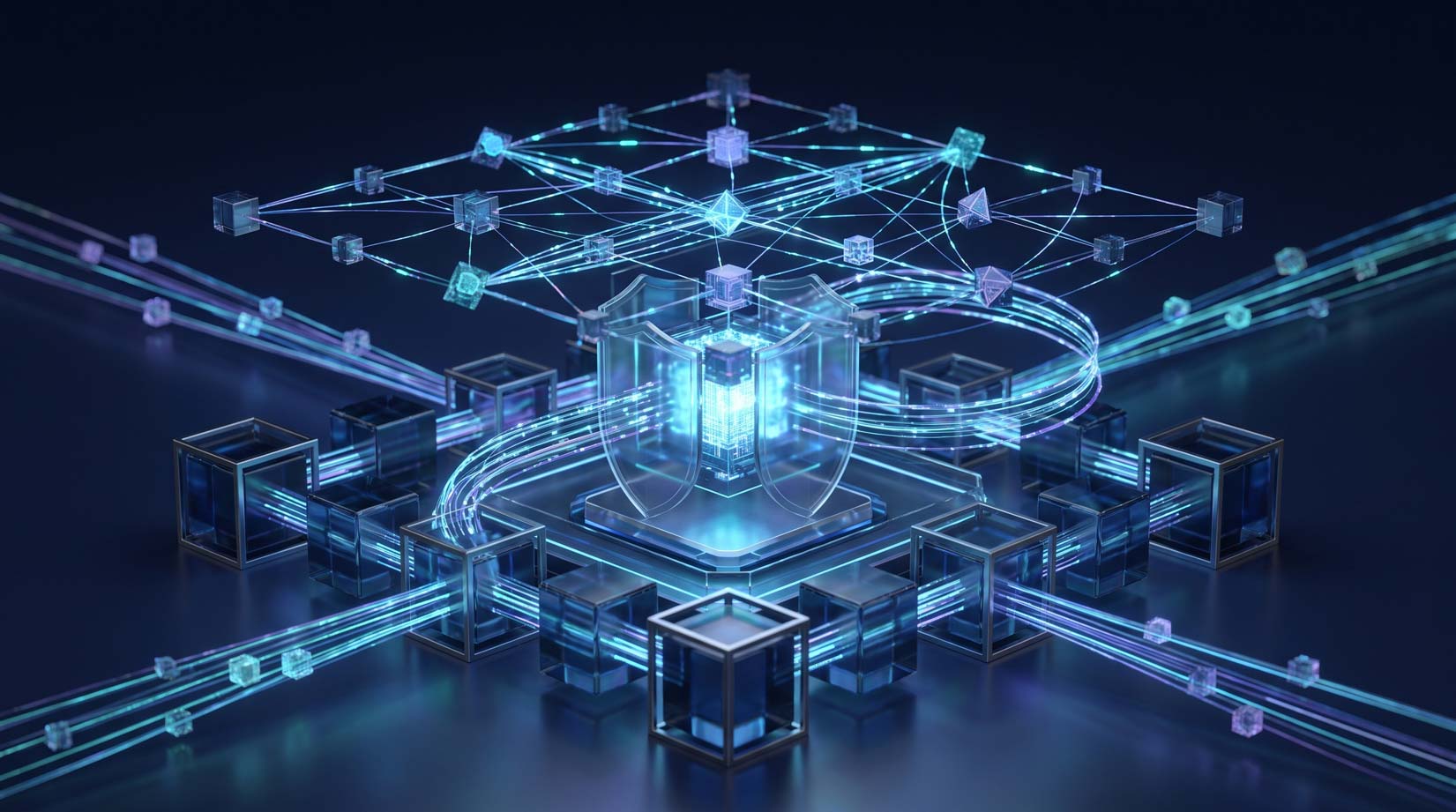
Optimistic and ZK-rollups
There are two main approaches to rollups.
Optimistic rollups
An Optimistic rollup starts from the assumption that a submitted result is correct unless someone proves otherwise.
It is, in other words, "optimistic."
If someone identifies an incorrect or fraudulent computation, they can challenge it within a certain period.
This model makes it possible to efficiently process large numbers of transactions, but it can mean a longer wait when moving funds directly back to Ethereum Mainnet.
ZK-rollups
ZK-rollups use a different verification method than optimistic rollups. Along with the transaction results, they also generate a cryptographic proof confirming that the computation was carried out correctly. Ethereum therefore does not need to redo all the operations itself, only verify the submitted proof.
The difference can be summed up simply as follows: an optimistic rollup says, "Let's assume the result is correct unless someone proves otherwise." A ZK-rollup instead says, "Here is the result, along with proof that it was computed correctly."
Neither approach is automatically better. Both solve the same problem in a different way, and each brings its own advantages, limitations, and technical trade-offs.
Layer 2 is not the same as a sidechain
Not every fast network connected to Ethereum is automatically a Layer 2. A sidechain is an independent blockchain that has its own validators, its own rules, and its own security model.
It may be connected to Ethereum through a bridge, for example, but its security is not directly provided by Ethereum Mainnet. So if a problem occurs on the sidechain, Ethereum itself may not be able to resolve it.
A true Layer 2 solution, by contrast, uses Ethereum as its security foundation. The difference is therefore not just in the name, but in the architecture itself. When evaluating a specific network, it is worth asking a simple question: Where does this network get its security from?
The difference between the individual layers is best seen through a direct comparison. The most important question is not just the network's speed, but also who verifies the transactions and where the given solution gets its security from.
What it is
Layer 1: Base blockchain
Layer 2: A layer built on top of the base blockchain
Sidechain: An independent blockchain connected to another network
Main role
Layer 1: Consensus, security, and final settlement
Layer 2: Higher capacity, faster and cheaper operation
Sidechain: Its own environment for faster or specialized transactions
Where it gets its security
Layer 1: From its own consensus and validators / miners
Layer 2: Relies to varying degrees on Layer 1's security and settlement
Sidechain: From its own consensus and its own validators
Main advantage
Layer 1: The highest level of base security in the given ecosystem
Layer 2: Lower fees and higher capacity while keeping a link to Layer 1
Sidechain: Flexibility, performance, and the option to set its own rules
Main risk
Layer 1: Limited capacity, higher fees under heavy load
Layer 2: Smart contracts, bridges, centralizing elements, and the specific implementation
Sidechain: The security of its own consensus and of the bridge to another network
Examples
Layer 1: Bitcoin, Ethereum, Solana
Layer 2: Lightning Network; Arbitrum, Optimism, Base
Sidechain: Polygon PoS
Layer 2 and a sidechain can therefore offer the user a similar outcome – faster and cheaper transactions – but technically they are not the same thing. What matters most is whether the given solution relies on the base Layer 1 for final settlement and the protection of funds, or on its own security model.

How Ethereum helps make Layer 2 cheaper
Scaling Ethereum does not depend only on the Layer 2 networks themselves. The base Ethereum layer is also gradually changing so that it can support additional layers more efficiently and at lower cost.
One concrete example was the Dencun upgrade in 2024. It introduced a new way of handling data for Layer 2 through so-called blobs. Storing and making data available on Ethereum accounts for a significant part of rollup costs, so more efficient handling of this data helped make the use of many Layer 2 networks cheaper.
Dencun is thus a good example of the fact that Ethereum is not trying to scale only by increasing the number of transactions directly on Mainnet. The base layer is also adapting to its role as a secure data foundation for the faster layers built on top of it. Scaling is therefore not just a question of what Layer 2 can do, but also of how well Layer 1 can support these layers.
What this means for the average user
For an average user, the difference between Layer 1 and Layer 2 can be almost invisible when using a wallet. But this is exactly why room for mistakes arises. The same token can exist on multiple networks, and individual exchanges, wallets, or applications may not support all of them.
Before transferring funds, it is therefore a good idea to check a few basic things:
The correct network: Checking the recipient's address is not enough. Both the sender and the recipient must be working on the correct, supported network. ETH on Ethereum Mainnet and ETH on a Layer 2 may have the same economic value, but technically they exist in different environments.
Exchange or wallet support: Not every service supports every Layer 2 network. Before withdrawing or depositing, it is therefore necessary to check whether the given exchange or wallet supports, for example, Ethereum Mainnet, Arbitrum, Optimism, or Base.
Transaction fees: Layer 2 solutions usually reduce the cost of everyday transactions, but fees are not the same everywhere and can change depending on the network, its load, and the type of operation.
A possible bridge: If funds are being moved between two different networks, it may be necessary to use a blockchain bridge. This adds another technological layer, and with it, additional risk. It is therefore important to know whether we are using an official or trusted transfer method, and what technically happens to the funds during the process.
The security of a specific Layer 2: Before using a particular network, it makes sense to check its architecture and any additional technical or centralizing elements.
For the user, therefore, the most important question is not only whether Layer 2 is faster or cheaper. It is just as important to know which network the funds are on, how they got there, and how they can be moved back.
Layer 2 does not automatically mean the same security as Layer 1
Layer 2 exists in order to make use of the properties of the main blockchain while also offering faster and cheaper operation. This does not mean, however, that it is automatically just as secure as Layer 1 itself. Security depends on the specific architecture and on which parts of the system still require trust in additional components.
A particular Layer 2 may carry its own risks, such as more centralized elements, a bug in a smart contract, or an issue when moving funds between networks. The level of security therefore depends on how the given solution is technically designed.
It is therefore necessary to distinguish between the security of Layer 1 itself and the security of a specific Layer 2 implementation. The label Layer 2 by itself is not a guarantee of the same level of security as the base blockchain.
Layer 1 or Layer 2?
The choice between Layer 1 and Layer 2 mainly depends on what the user needs. For final settlement and working directly with the base blockchain, Layer 1 makes sense, while for more frequent transactions or using applications, Layer 2 can be more practical. It is always important to also take into account the specific security model of the given solution.
A similar principle is familiar from the traditional financial system. Not even every card payment is settled instantly at the highest level between banks. Individual operations take place across several layers, and only the resulting obligations are settled afterward.
Blockchain is gradually heading down a similar path: the most secure layer does not need to do everything itself, as long as additional layers exist above it that can handle part of the traffic more efficiently.
Bitcoin and Ethereum use layers differently
Not all Layer 2 solutions work the same way. The Lightning Network is focused primarily on fast, cheap Bitcoin payments, while Ethereum also uses Layer 2 as a space for a much broader range of applications.
On Ethereum rollups, decentralized exchanges, stablecoins, lending protocols, games, and other smart contract applications can all run. Their role is therefore significantly broader than simple value transfers.
The difference lies mainly in purpose and technology: Lightning scales primarily Bitcoin payments, while Ethereum's Layer 2 networks also create space for computation and entire decentralized applications.
Conclusion
The debate about Layer 1 and Layer 2 is therefore not a contest over which layer is better. It is more about dividing different tasks so that blockchain can grow without every single operation having to burden the base network.
Bitcoin and Ethereum show two different approaches. The Lightning Network extends Bitcoin primarily for fast payments, while Ethereum rollups handle transactions, smart contracts, and decentralized applications alike. In both cases, though, it is necessary to look not only at speed and cost, but also at the specific technical trade-offs and risks involved.
The future of blockchain will therefore probably not rest on a single network that has to do absolutely everything. Just like the internet or the traditional financial system, it can function as a multi-layered infrastructure, where each layer handles a different task. The most important question, then, is not whether Layer 1 or Layer 2 is better, but what must remain on the most secure foundation and what can be moved to a faster layer above it, without losing trust in the final result.
This text is for informational and educational purposes only and does not constitute investment advice. Crypto assets are volatile, and you may lose the entire amount invested.
Author
Tomáš Bára


Stablecoins: Digital Money Between Crypto and Traditional Finance
Bitcoin and Ethereum showed just how volatile the world of cryptocurrencies can be. That's exactly why one of the most important parts of this market became stablecoins – assets whose goal is to not change their value. Find out what keeps their price stable, how USDC, USDT, or crypto-collateralized tokens differ, and what the collapse of TerraUSD revealed.
Smart Contracts: When Code Executes the Rules
Blockchain isn't just for transferring cryptocurrencies. It can also store and execute pre-programmed rules – and this is exactly the principle behind smart contracts. Find out how the "if condition A occurs, execute action B" principle works, why rollups and oracles are crucial for Ethereum, and what the case of The DAO revealed, where a bug in the code cost the network millions of dollars.