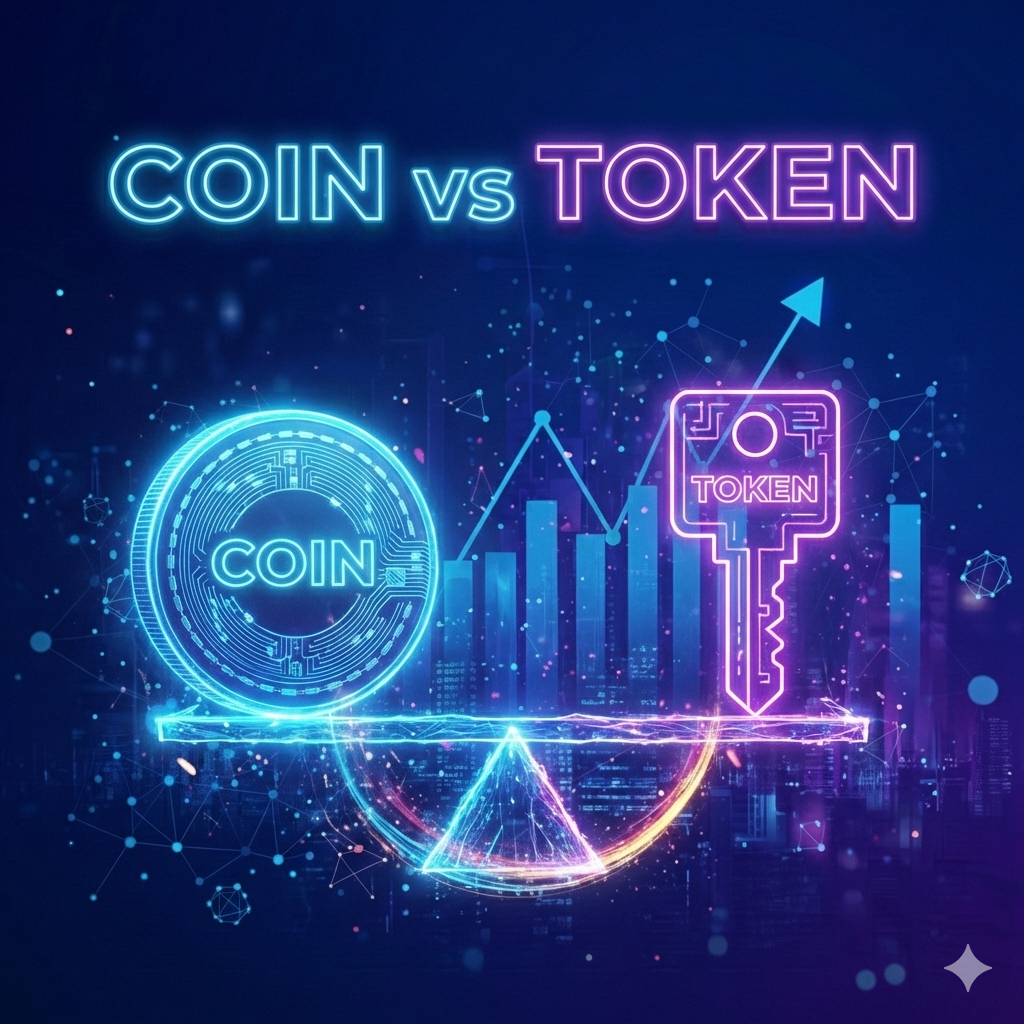
What Differentiates a Coin from a Token and Why It Is Good to Understand It
In the world of cryptocurrencies, we often encounter the terms coin and token, which may at first glance appear to be identical. In reality, however, they refer to two different types of digital assets that function differently and have distinct use cases. Understanding this difference is important for every beginner who is just starting to explore cryptocurrencies and wants to make informed decisions.
What Is a Coin
A coin is a cryptocurrency that has its own blockchain. It represents the core asset of a given network, and without it, the network could not function. A typical example is Bitcoin within its network or Ether within the Ethereum network. A coin is most commonly used as digital money for storing value, transferring between users, or paying transaction fees within the given network. When you purchase a coin, you are buying the basic unit of a specific blockchain that has its own history, community, and technology.
What Is a Token
A token is a digital asset that does not run on its own blockchain but instead uses the infrastructure of an already existing network. It is created through smart contracts, which are programs that define digital agreements, on platforms such as Ethereum. A token can serve various functions. For example, it may provide access to a specific service, grant benefits within a project, or represent certain rights. Thousands of different tokens can exist on a single network, each with its own rules, economic model, and risks. When it comes to tokens, it is therefore important to look not only at the technology of the network on which they operate, but also at the specific project that created the token.
How to Distinguish Them and What It Means for You
From a practical perspective, the key question is whether the given asset has its own blockchain or runs on an already existing network. If it is the native currency of a blockchain, we are talking about a coin. If it is an asset created on an existing network, it is a token. With coins, the focus is usually on the network itself and its position within the ecosystem. With tokens, it is also important to examine the project behind them, their specific purpose, and the associated risks.
Therefore, if you are able to distinguish whether you are exchanging your financial resources for a coin or a token, you better understand what type of asset you hold, what role it plays in the crypto world, and what aspects to focus on when making decisions. Together with understanding other fundamental concepts and principles, this distinction forms an important part of navigating the world of cryptocurrencies, especially if you are just starting out or have only limited experience so far.
Moody’s and Chainlink Aim to Bring Credit Ratings to Blockchain. The Tokenized Asset Market Has Already Reached Approximately $40 Billion
Rating agency Moody’s Ratings, in collaboration with the Chainlink network, has successfully tested the broad distribution of credit ratings directly into the blockchain environment. Although no actual rating decisions were issued during the November pilot project, the technology demonstrates how institutional investors could automate their work with risk models for tokenized bonds in the near future. The goal is to create universal infrastructure for a market that currently manages assets worth tens of billions of dollars.
Zcash Accelerates Private Payments: Shorter Wait Times Come at a Cost of Modernization
The cryptocurrency Zcash (ZEC) has successfully implemented the NU7 technological upgrade, directly changing the user experience of private transactions. The network has reduced its target block time from more than one minute to approximately 25 seconds, seeking to transform its original technological advantage into a financial service suitable for everyday use. While ordinary users benefit from faster payment confirmations, the upgrade also affects the economics of mining and, for some investors, means that older assets are currently locked up indefinitely.