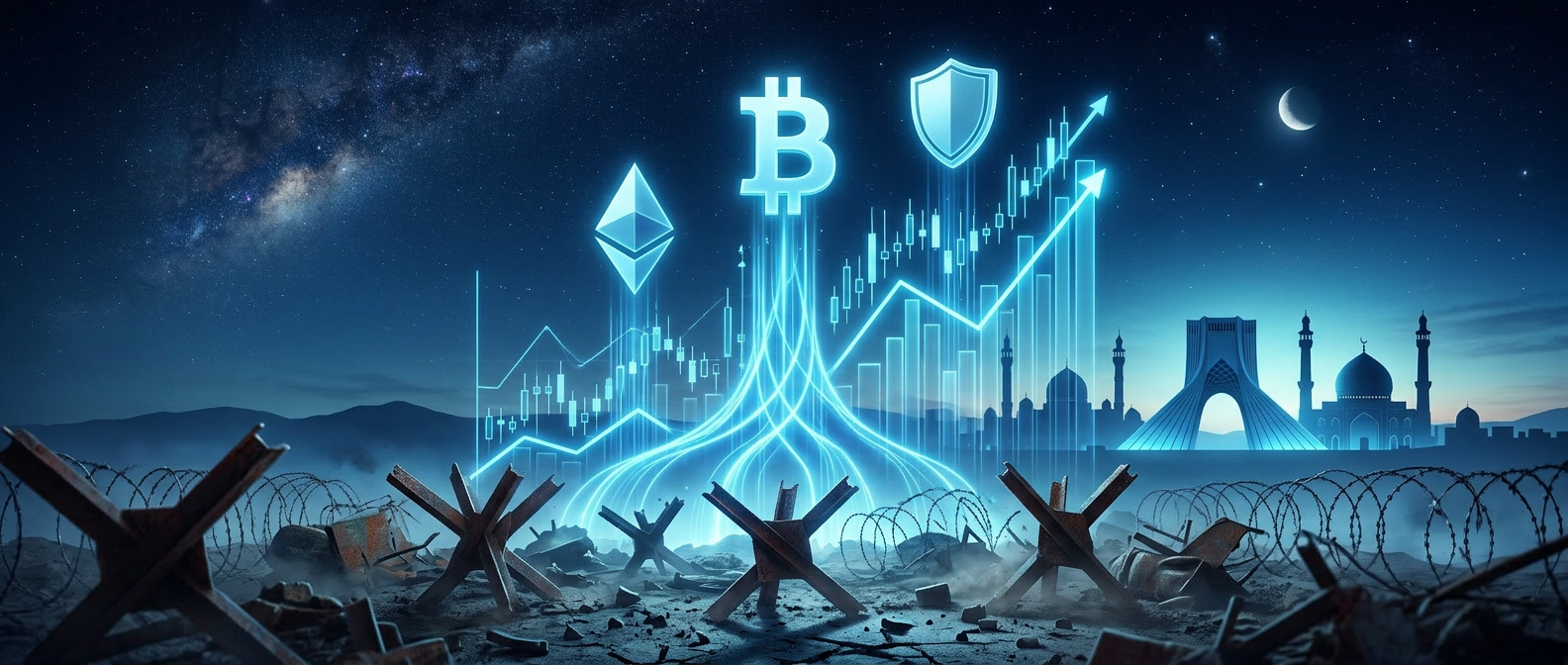
How the End of the War in Iran Could Reshape the Crypto Market
Trump sent the market exactly the impulse it was waiting for
The main catalyst was Donald Trump's statement that, according to recent reports, the conflict could end "very soon" and that US military objectives were "pretty well complete." He also made another statement saying that the war is "very complete, pretty much." This was a strong positive impulse for cryptocurrencies, as the market received two signals at once. A possible early end to tensions and Washington's belief that the main phase of the operation is coming to an end.
Bitcoin is at $71,228, Ethereum is above $2,070, and XRP is holding at $1.41
This was immediately reflected in prices. At the time of writing, Bitcoin is up by more than 5% in the last 24 hours, surpassing the $70,000 mark and currently trading at $71,228. Ethereum reclaimed the $2,000 mark and rose above $2,070. It has added 3.71% in the last 24 hours. Solana is doing even better than Ethereum, rising by as much as 4.26%. However, XRP performed best, gaining 5.31% and currently trading at $1.41. The rest of the cryptocurrency market responded with growth as well.
The market has shown that even after shocks, it can quickly find new strength
Today's growth does not appear to be an isolated shot from a single coin. Bitcoin rebounded from around $66,000 on Monday, and the volatility associated with the war began to subside. Reuters also noted that large buyers helped keep Bitcoin stable even during the previous tension. This is an important fact because resilience during uncertainty is often the first sign that the market is ready to continue higher when a positive impulse appears. From a sentimental perspective, this is not just a normal rebound, but a moment that could strengthen investor confidence in a broader return to growth across the crypto market.
The euphoria is back, but the crypto market is still waiting for confirmation
Despite today's growth, it remains important that cryptocurrencies are still responding mainly to expectations and not to a definitively confirmed end to the conflict. Reuters pointed out that the Iranian side has also issued tougher statements that cast doubt on the idea of a quick end to the war. For cryptocurrencies, this means that although sentiment has improved significantly, it remains extremely sensitive to every new headline. If the positive scenario is confirmed, the market may continue to grow. If not, volatility may return very quickly.
How the end of the war could affect cryptocurrencies
If the conflict in Iran were to end, it would likely mean further improvement in sentiment and continued growth for cryptocurrencies. The market has already shown that it reacts quickly to similar news, with Bitcoin rising above $71,000 after Trump's remarks and major altcoins joining the rally. A confirmed end to the war could bring greater certainty to the market, reduce nervousness, and encourage capital to return to Bitcoin, Ethereum, and other major cryptocurrencies. The end of the conflict could thus mean not only an increase in the prices of major cryptocurrencies, but also stabilization of trading, stronger investor confidence, and better conditions for the continuation of the current recovery of the entire market.

Hyperliquid Appears on Bloomberg Terminal
Perpetual contracts from the decentralized derivatives platform Hyperliquid have appeared in the Bloomberg Terminal data environment. The DeFi protocol has therefore crossed an important threshold toward greater visibility among professional investors. However, the listing of data itself does not automatically mean that traditional financial institutions are beginning to trade on the platform.

How Does Vitalik Buterin Want to Change Ethereum by 2030?
Ethereum founder Vitalik Buterin has presented his long-term vision for the world’s second-largest cryptocurrency. By 2030, the network is intended to transform into a so-called cryptographic world computer. The foundation of the entire change is to move away from the existing model, in which every computer repeats the same calculations, and replace it with fast mathematical proofs and stronger privacy protection.