
A digital lawyer without a suit: How smart contracts are changing the rules of the game?
Imagine a situation where you are buying real estate or a car from a stranger on the other side of the world. The usual process forces you to go through a lengthy procedure between banks, lawyers, and authorities. You have to trust that the seller will send the documents, they have to trust that you will send the money, and in the end both of you pay considerable commissions to intermediaries just for overseeing the entire process. This is exactly the moment when smart contracts come into play, promising the removal of unnecessary witnesses and the transformation of traditional bureaucracy into an instant digital process.
The coffee machine principle in the digital world
The simplest way to understand how a smart contract works is to imagine an ordinary coffee vending machine. This machine does not need a seller or a lawyer because it operates on predefined logic. When you insert the correct amount and press a button, the machine verifies whether the conditions have been met and then dispenses the drink. A smart contract works on an identical principle, but instead of mechanical components it uses computer code stored on the blockchain. It is a digital agreement that executes itself the moment the conditions are fulfilled without any human intervention.
A new era of efficiency and absolute trust
The main reason why smart contracts are generating so much excitement is their ability to create trust where it was previously lacking. With traditional contracts, we rely on the honesty of the other party or on the power of the law, which is often expensive and slow. In the case of smart contracts, however, we rely on mathematics and the immutability of code. Since the contract runs on a decentralized network, no one can subsequently falsify it or stop its execution. This technology thus brings extreme speed, as transactions take place in milliseconds, while at the same time dramatically reducing costs by eliminating third parties that would otherwise consume part of your profit.
Practical use in everyday life
Although they are mostly discussed in connection with cryptocurrencies, their true potential lies in practical solutions for everyday people. A great example is automated flight insurance. If you purchase insurance through a smart contract, the system can independently track data about flight delays. The moment your flight exceeds the defined delay threshold, the contract automatically releases compensation directly to your account without you having to fill out any claim forms. Similarly, this works in digital art, where thanks to code, artists receive a share from every subsequent sale of their work automatically and for life.
When code meets reality and its limits
Despite their revolutionary potential, smart contracts also have a dark side that stems from their very nature. In the world of blockchain, the rule applies that code is law, which means that if a programmer makes a mistake in the contract, a hacker can exploit it and the money is irreversibly gone. Since the system is irreversible, there is no customer support line that could reverse the transaction. Another challenge is the connection to the real world, where the contract needs so-called Oracles, meaning external data sources. If a smart contract receives incorrect input information, it will execute an incorrect command, opening the door to new types of risks.
The future in lines of code
Smart contracts are not just a technological gimmick for cryptocurrency enthusiasts, but represent a profound change in how we will conclude agreements in the future. We are heading toward a world where contracts will not gather dust in folders, but will live on a digital network and work for us autonomously. We are still in a phase where we are learning to write this new kind of law safely, but the direction is clear. Over time, we will likely stop asking whether we can trust an algorithm and start wondering why we once needed so many stamps and papers for a simple exchange of value.
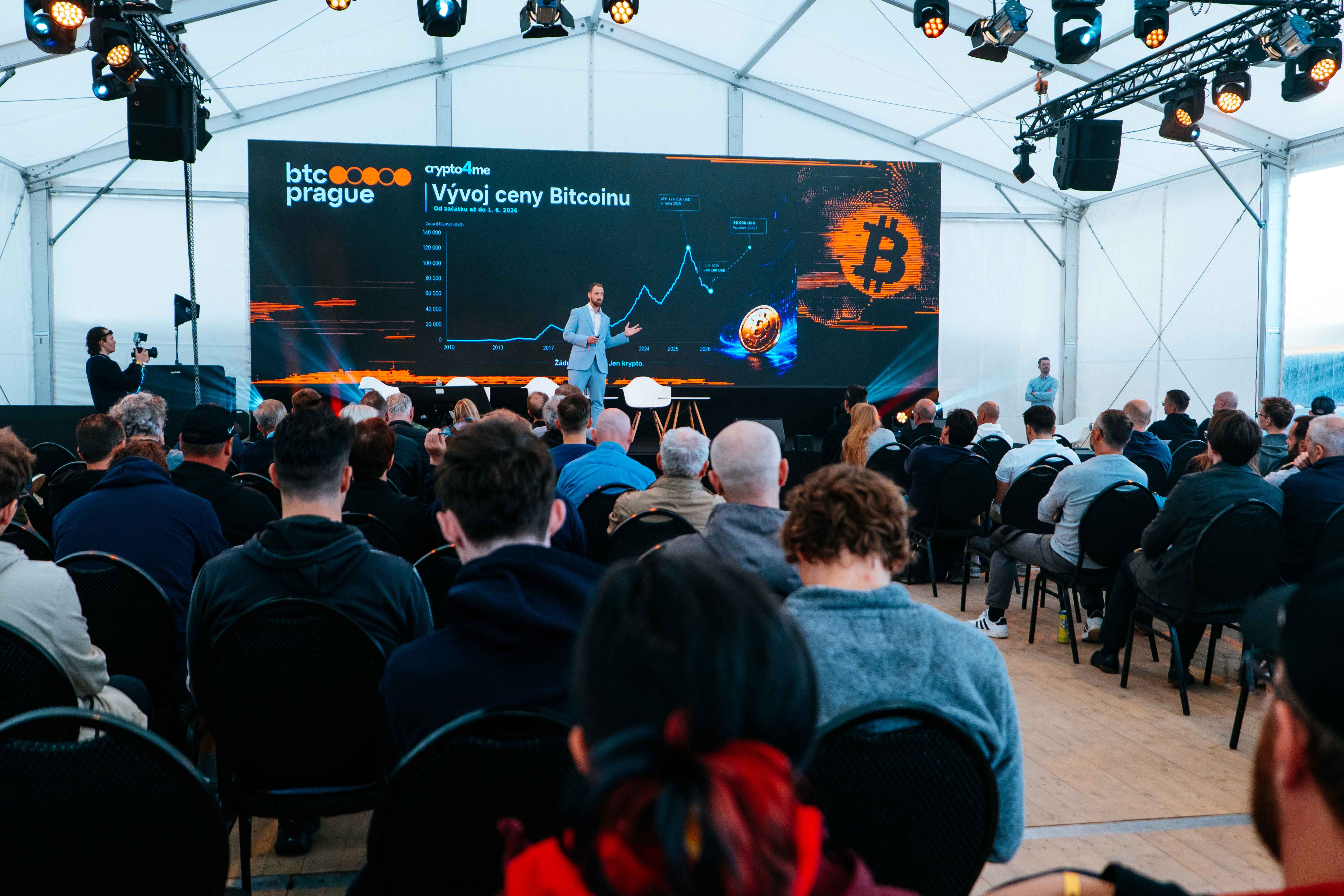
Crypto4me presented Plan ₿ to the European Bitcoin community at BTC Prague 2026
From June 11 to 13, 2026, the fourth edition of BTC Prague took place in Prague's Letňany district. One of Europe's most important Bitcoin conferences once again brought together experts, entrepreneurs, developers, investors, and members of the public interested in Bitcoin.
.jpg)
Cryptocurrencies at the gates of Congress: Tax reform faces political resistance
The U.S. House Committee on Ways and Means recently discussed a package of six bills that could fundamentally change the taxation of digital assets. Although the cryptocurrency sector is calling for simplified rules, deep differences between Republicans and Democrats ahead of the approaching elections are placing the entire reform into uncertainty. The question is whether the state can create fair rules without disadvantaging the traditional financial system.